


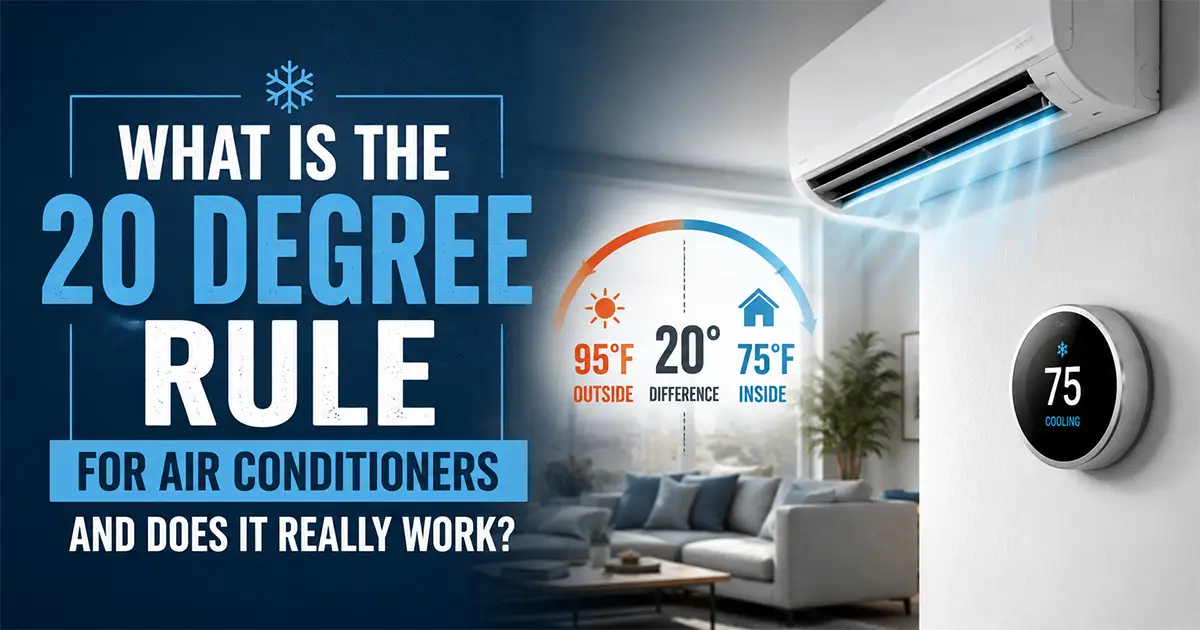
You've probably heard that a home air conditioner can cool your house about 20 degrees below whatever it is outside. When the thermometer hits 95°F, that puts you somewhere around 75°F indoors with a system that's running the way it should.
This guideline gets passed around a lot because it explains air conditioning in plain terms. On the worst days of summer, people figure that pushing the thermostat lower will somehow squeeze colder air out of the unit. That's not how any of this works.
The rule ties together three things you care about: comfort, efficiency, and how well your system holds up. Once you know what your equipment can actually do, you stop overworking it and stop worrying when the outdoor temperature goes off the charts.
Why Your AC Has a Ceiling
Home air conditioners are designed to pull heat out of indoor air at a fixed rate. Every unit has a cooling capacity shaped by its size, your insulation, the shape your ductwork is in, and how hot it gets outside.
Our technicians lean on a measurement called temperature differential, or Delta-T. It tracks the gap between the air going into the system and the cooled air coming out of your supply vents. Most systems running normally drop that air somewhere between 16 and 22 degrees as it crosses the evaporator coil.
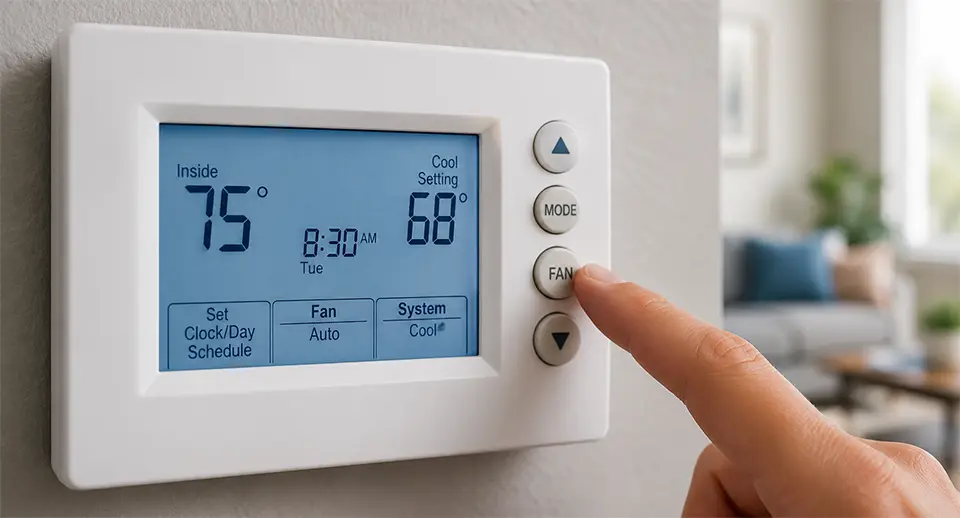
Here's where a lot of folks get tripped up. Cooling capacity and thermostat settings are two different things. Setting the thermostat to 68°F instead of 75°F won't make the system cool any faster. It just tells the AC to keep running until it reaches that number, and only if the equipment can get there at all.
So Is It a Hard Limit?
This is the biggest myth of the bunch: that an air conditioner can never beat a 20-degree spread. Not true.
A well-insulated home with the right-sized equipment can hold temperatures more than 20 degrees below what's outside, especially when humidity is low or the sun isn't beating down. A house sitting at 72°F on a 95°F day happens all the time under the right conditions.
So think of the 20 degree rule as a practical benchmark, not a brick wall. It keeps your expectations grounded when summer peaks.
Chasing very low indoor temperatures during a heatwave comes with a price, though. The system may run nonstop, pull more electricity, and put real strain on the parts that keep it alive.
What Happens When You Ignore It
- Your energy use climbs: Lower thermostat settings mean longer run cycles, and longer run times go straight to your power consumption.
- Your bills follow: When the AC runs for hours at a stretch, the summer cooling costs add up fast and you'll feel it.
- Your components wear down: Compressors, blower motors, and capacitors all take a beating when the system rarely gets a chance to cycle off.
- Repairs and replacements come sooner: Constant operation eats into equipment lifespan. Breakdowns get more common, and you may face replacement years before you planned for it.
- Humidity control slips: Temperature gets all the attention, but moisture has just as much to do with comfort. A system that's already maxed out has a hard time keeping indoor humidity in check, especially when it's hot and muggy at the same time.
Cooling Off Without Touching the Thermostat
Ceiling fans create a wind-chill effect that makes a room feel several degrees cooler even though the temperature hasn't budged.
Keeping blinds and drapes closed during the brightest part of the day blocks a surprising amount of heat. South-facing and west-facing windows tend to be the worst offenders.
Appliances throw off heat too. Skip the oven when you can, run the dishwasher in the cooler evening hours, and shut down electronics you're not using to lighten the load on your AC.
Air leaks around windows and doors let your cooled air slip right out. Sealing those gaps makes the house more comfortable and lets the system run more efficiently.
Insulation and airflow round it out. Homes with solid attic insulation and clear, unblocked vents tend to stay comfortable with a lot less work from the equipment.
Smart Thermostat Strategies for Summer
A lot of energy experts point to 78°F as a good target when you're home and moving around. Everyone's preferences differ, but that setting tends to land in the sweet spot between staying cool and keeping costs down.
When nobody's home for a few hours, bumping the temperature up a few degrees trims your energy use and you won't notice a thing when you walk back in.
Programmable and smart thermostats handle these adjustments for you, which saves money while keeping the house steady.
Try to avoid big temperature swings. Asking the system to claw back from a dramatic setback during the hottest stretch of the day only piles on strain and drags down efficiency.
When to Call Us
If your air conditioner can't hold a reasonable indoor temperature, it's worth getting a professional involved. A few warning signs to watch for:
- Strange noises while it's running
- Warm air drifting from the supply vents
- Water pooling around the indoor unit
- A suspected refrigerant leak
- Frequent cycling on and off
- Energy bills climbing with no clear reason
- Repairs that keep coming back
Call Advantage Heating & Air for a complete inspection, and we'll find out whether a simple repair will fix things or whether replacement makes more sense for the long haul.

Final Thoughts
The 20 degree rule still holds up as a handy way to understand how your air conditioner performs in the heat. It keeps your expectations realistic and nudges the system toward running efficiently.
Comfort, efficiency, and a long equipment life work best when you balance them together. Small moves like better airflow, improved insulation, and smarter thermostat settings add up to a real difference, all without pushing your air conditioner harder than it needs to go.
Build these habits into your summer and your AC will keep you comfortable through the season while sidestepping the extra wear and the higher bills. And as always, we're here when you need us. Call (870) 238-8785 and a friendly face from Advantage Heating & Air will be happy to stop by to help!