


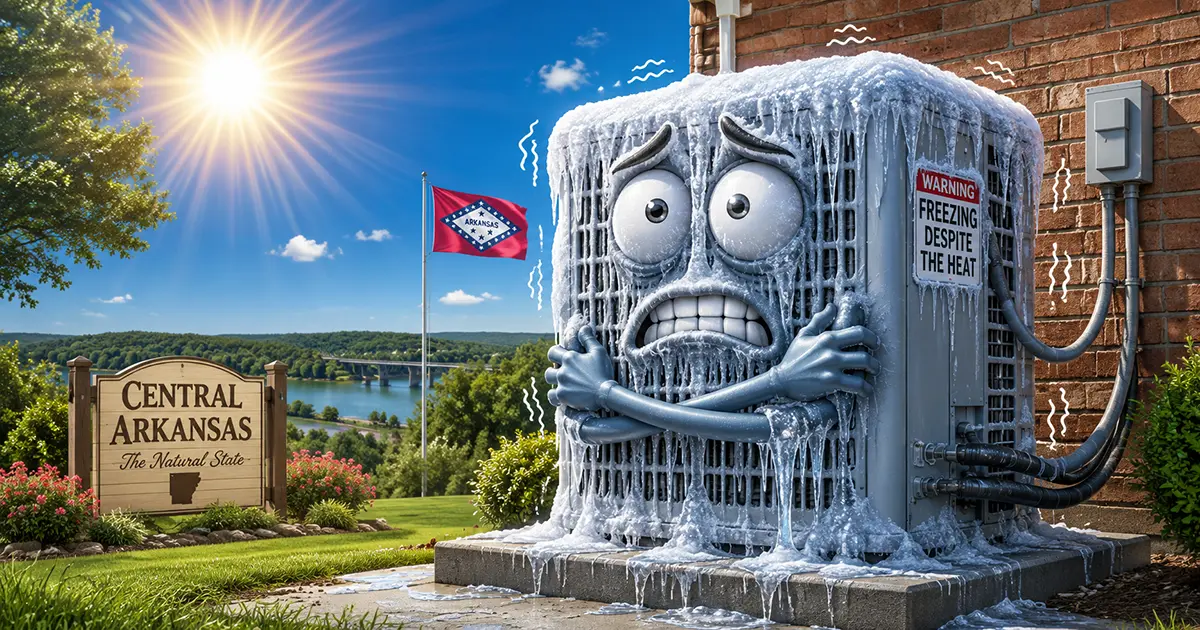
Ice on an air conditioner in July feels almost impossible. The house is warm, the thermostat swears the system is running, and then you spot ice riding along the refrigerant line, the indoor coil, or part of the unit itself. It catches homeowners flat-footed because it seems backward. An AC is supposed to cool the house, not turn into a block of ice.
Freeze-ups are common in hot weather all the same. Summer heat makes your system run harder and longer, so small issues that slipped by in spring turn into real trouble once the AC is grinding away for hours at a stretch. A dirty filter, weak airflow, low refrigerant, a clogged drain line, or a struggling fan can each drive the temperature inside the unit too low. Moisture collects, ice forms, and pretty soon the system can't cool your home the way it should.
The maddening part is that a frozen AC usually keeps running. Homeowners drop the thermostat, hoping a colder setting fixes the warm air limping from the vents. That almost always makes it worse. A frozen system needs attention, not a lower number on the wall.
Here's the good news. A lot of freeze-ups are preventable. Once you know why the system ices over, you can catch the warning signs early, handle the simple checks safely, and recognize when it's time to call a technician.
Why an Air Conditioner Can Freeze When It's Hot Outside
Your air conditioner doesn't make cold air out of nothing. It pulls heat out of the air inside your home and carries that heat outdoors. The evaporator coil does most of the work. Warm indoor air passes across the coil, the refrigerant soaks up the heat, and cooled air heads back through the house.
That warm air is doing a job you don't see. It keeps the evaporator coil from getting too cold. Starve the coil of enough warm air and its temperature can slide below freezing, at which point moisture from the air lands on it and turns to ice.
Refrigerant pressure swings the coil temperature too. When the level drops because of a leak, the pressure inside the system shifts, and the coil can run colder than it should. That's another road to ice.
Once the ice starts, airflow gets worse. The system leans in harder, cooling weakens, and the freeze spreads. That's how a small airflow hiccup snowballs into a bigger repair when the AC keeps chugging through it.
Low Refrigerant Can Freeze the Whole System
Low refrigerant ranks among the more serious causes. Refrigerant is the chemical that lets your AC grab heat from inside the house and release it outside, and the system is built to run on one specific charge. Drop below that and it can't do its job right.
Plenty of homeowners hear "low refrigerant" and figure the AC just needs a top-off. Residential systems don't burn refrigerant the way a car burns gas, though. A low level almost always means a leak somewhere, so adding more without finding and sealing that leak buys you a little relief and nothing more.
Signs of low refrigerant include weak cooling, longer run times, ice on the coil or the refrigerant lines, warm air from the vents, or a hissing sound near the unit. You might also catch the AC running nearly nonstop while the house never gets comfortable.
This one isn't a DIY job. Refrigerant takes the right tools, training, and licensing. When a technician from Advantage Heating & Air finds a leak, they repair it, test the system, and bring the charge back to where it belongs. Wait too long and the strain lands on major parts, including the compressor, which is one of the priciest components in the whole machine.
A Dirty Air Filter Is a Small Problem That Causes Big Trouble
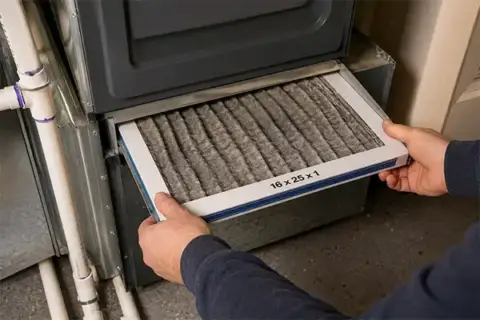
A clogged filter is one of the most common reasons an AC freezes in summer. It's also one of the easiest things a homeowner can check.
Your filter traps dust, pet hair, pollen, and everything else before it rides through the HVAC system. As it loads up, air has a harder time getting through. Airflow drops, less warm air reaches the evaporator coil, the coil gets too cold, moisture freezes, and the AC ices over.
A dirty filter causes trouble beyond freezing, too. It makes the system run longer, pushes energy bills up, drags down indoor air quality, and leaves some rooms cooler than others. Anyone in the house with allergies, asthma, or a sensitivity to dust feels a neglected filter fast.
During heavy cooling season, check the filter once a month. Some last longer than others, but homes with pets, kids, high dust, heavy pollen, or steady AC use often need it swapped sooner. The right schedule depends on your home, not the date on the filter packaging.
If your AC freezes and the filter looks gray, dusty, or clogged, replace it before you restart the system after it thaws. A fresh one may fix the whole thing if restricted airflow was the culprit.
Blocked Vents and Airflow Problems Can Lead to Ice
Air needs a clear path through your system. Block the supply vents or return grilles and airflow can fall far enough to trigger a freeze.
This happens more easily than people expect. A couch drifts in front of a return. Curtains drape over a floor register. A bedroom vent gets shut because the room runs cold. Storage boxes pile up ahead of a grille. One blocked vent isn't a crisis, but stack up several restrictions and the system starts to fight.
Closing off too many vents backfires too. Some homeowners shut the registers in unused rooms to save a few dollars. In a lot of homes that creates pressure problems in the ductwork and cuts airflow across the coil, so instead of trimming the energy bill, the system runs less efficiently and grows more likely to freeze.
Duct trouble looks similar from the inside. Leaky, crushed, disconnected, or poorly sized ducts keep enough air from reaching the system. If certain rooms always feel stuffy, warm, humid, or weak at the vents, the ductwork could be part of the story.
A quick walk through the house helps. Make sure the vents and returns are open, clean, and clear of furniture, rugs, curtains, toys, and clutter. If the airflow still feels weak after you've replaced the filter and cleared everything, get a technician to look the system over.
Dirty Evaporator Coils Keep the AC From Absorbing Heat
The evaporator coil has to absorb heat from the air moving across it. Dirt gets in the way.
Give it time and dust and grime settle onto the coil, especially when filters go too long between changes or the system hasn't seen maintenance. That buildup works like insulation. Heat can't transfer easily, the coil stays colder than it should, and moisture landing on it freezes. The ice chokes airflow, which brings on more ice.
Dirty coils tend to creep up on you, so the signs are subtle before the full freeze arrives. The AC runs longer than usual. A few rooms feel humid. Cooling weakens in the afternoon. The energy bill climbs even though nobody touched the thermostat habits.
Coil cleaning isn't always a simple DIY job. The coil can be tough to reach, and it's easy to bend the delicate fins or nick a nearby part. A professional tune-up can fold in a coil inspection and cleaning when it's needed. It's one of those steps that makes a real difference across a long, hot summer.
A Clogged Condensate Drain Line Adds Moisture Problems
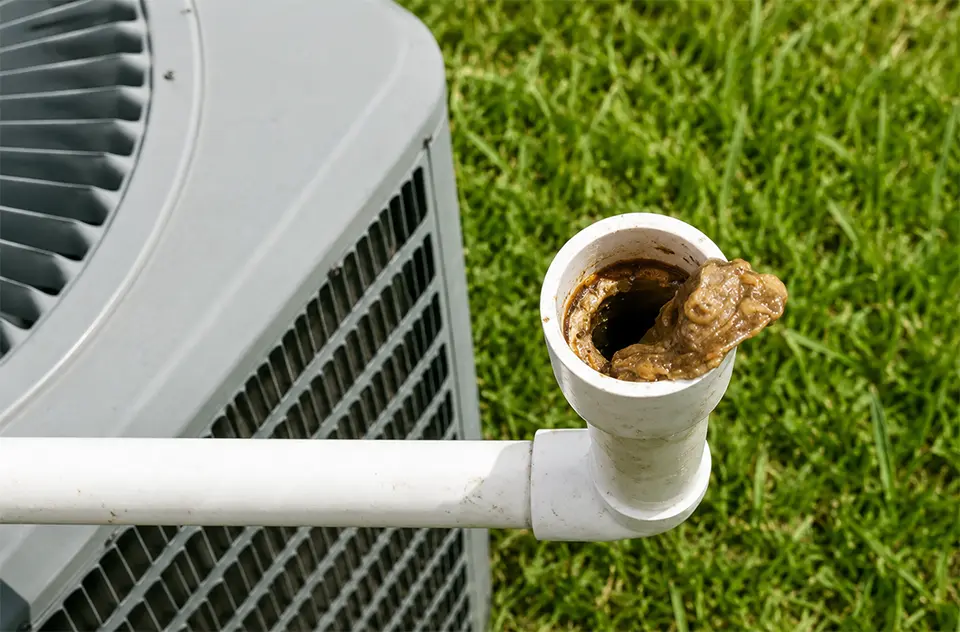
Air conditioners pull moisture out of the indoor air as they cool. That water collects and drains off through the condensate line. Let the line clog with algae, dirt, sludge, or debris and water can back up near the indoor unit.
A clogged drain line won't always freeze the system on its own, but extra moisture around cold components feeds ice problems. It also invites water damage, musty odors, ceiling stains, or a shutoff if the unit has a safety switch.
Homeowners usually catch drain trouble when there's water around the indoor unit, a damp smell near the system, or an AC that quits during humid weather. Ignoring that water is a gamble. Moisture around HVAC equipment ruins nearby materials and makes the whole area unpleasant.
Regular maintenance keeps the line clear. If the AC has frozen and you're also seeing water near the unit, mention both when you schedule service. They may be tied together.
Thermostat Habits Can Make Freeze-Ups Worse
When the house feels warm, setting the thermostat way down is tempting. You walk in from the heat, see 77 inside, and jab it down to 65 because that feels like the shortcut to relief.
That setting doesn't cool the house any faster. It only tells the system to run longer. If the unit already has an airflow or refrigerant problem, the extra run time drives the freeze deeper.
Outdoor temperature matters here as well. Many air conditioners aren't built to run when it's cool outside, particularly near or below 60 degrees. Run the AC on a cool night and the pressure conditions can drift off, which opens the door to ice.
A bad thermostat contributes too. When it reads the wrong temperature, won't shut the system off, or forces unusually long cycles, the AC runs more than it should. A service visit can check the thermostat's calibration, wiring, and cycle settings.
A smart thermostat helps some homeowners run cooling more efficiently. It trims wasted run time, builds better schedules, and makes odd patterns easier to spot. It can't seal a refrigerant leak or scrub a dirty coil, but it eases the strain when the rest of the system is healthy.
Blower Fan Problems Reduce Airflow
The blower fan pushes air across the evaporator coil and out through the ducts. When that fan slows, stalls, or runs unevenly, airflow drops, and once airflow drops, the coil can get cold enough to freeze.
Fan trouble shows up as weak airflow from the vents, uneven cooling, odd noises, short cycling, or a system that seems to run without moving much air. The root could be the fan motor, a capacitor, a relay, the control board, wiring, or dirt caked on the blower assembly.
Electrical work belongs to a qualified technician. Burnt wiring, failing parts, and motor problems raise safety concerns and lead to bigger repairs when they're left alone.
If you've already changed the filter and opened the vents but the airflow still feels weak, don't keep running the AC and hoping it clears. Weak airflow paired with ice is a sign the system needs a closer look.
Older AC Systems Are More Likely to Freeze
Age makes freeze-ups more likely. An air conditioner runs on a lot of parts working in concert: coils, fans, wiring, refrigerant lines, drain lines, motors, capacitors, controls, and duct connections. As the equipment ages, wear and dirt start dragging on performance.
An older AC can develop small refrigerant leaks, a weaker fan, dirty coils, failing electrical parts, or sagging efficiency. Any one of those pushes it toward freezing. Several at once leave homeowners fighting repeat breakdowns through the hottest stretch of the year.
Maintenance keeps an older unit going longer, but there's a point where the repair costs deserve a hard look. If the system is pushing 10 years or more, freezes over and over, needs a major repair every season, or can't keep the house comfortable, it's worth talking about replacement.
A newer air conditioner can bring better efficiency, steadier cooling, quieter operation, and improved comfort. The right call depends on the age of the equipment, the repair history, your utility costs, and the shape of the home's ductwork.
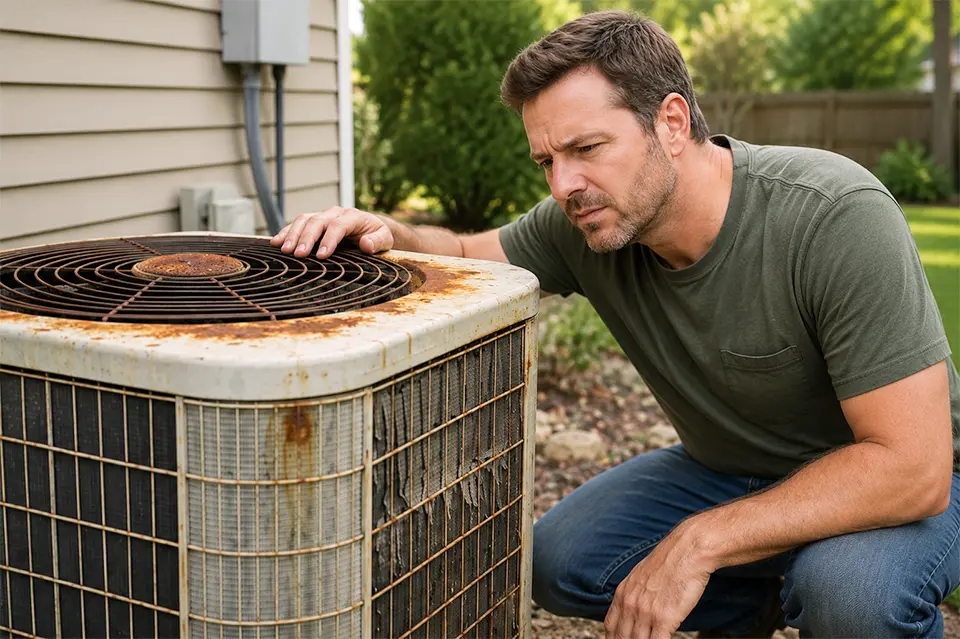
What to Do When Your AC Freezes
The first step is simple: shut the cooling off.
Don't keep running the AC with ice on the coil or the refrigerant lines. Running a frozen system strains the compressor and other major parts, and the unit needs to thaw before anyone can diagnose it accurately.
Flip the thermostat from cooling to off. Then set the fan to on, if your thermostat allows it. Fan-only operation moves air through the system and can melt the ice faster. Depending on how bad the freeze is, thawing runs anywhere from a few hours to most of the day.
Check the filter once the system's off. Dirty? Replace it. Then walk the vents and returns throughout the home and make sure they're all open and unobstructed.
Don't chip at the ice. Screwdrivers, knives, or any hard object can gouge the coil and refrigerant lines, turning a manageable service call into a much steeper repair. A hair dryer on a gentle setting can melt visible ice, but keep water away from the electrical components and don't overheat any parts.
After the ice melts, the system may run fine again if a dirty filter or blocked vent caused it. If the ice comes back, cooling stays weak, or you notice water around the unit, schedule professional service. Recurring freezing is a symptom, not a quirk you learn to live with.
How to Prevent Your AC From Freezing Again
Prevention starts with airflow. Check the filter monthly through summer and replace it as needed. Use the correct size and make sure it seats securely. A filter too restrictive for your system can choke airflow on its own, so ask your technician if you're unsure which type fits best.
Keep the vents and returns open and clear. Furniture and household clutter have a way of creeping in front of registers over time, and a quick check every few weeks heads off airflow problems before they turn serious.
Always call Advantage HVAC to book annual maintenance, ideally before peak summer heat. A solid visit can cover refrigerant levels and pressure, a coil inspection, a cleared condensate drain, thermostat testing, an electrical check, a blower inspection, a cleaning of the outdoor components, and a look for signs of wear.
Mind your thermostat habits, too. Skip the extreme settings. Pick a comfortable temperature and give the system room to work. If you're leaving for several hours, nudging the setting up a few degrees cuts run time and saves energy without turning the house into an oven by the time you're back.
Listen to the system. Weak airflow, warm air from the vents, hissing, frequent cycling, musty odors, water near the indoor unit, sudden humidity, or a rising bill can all flag something worth checking. Most homeowners can tell when the AC feels off. Trust that instinct.
When to Repair and When to Replace
A frozen AC doesn't automatically mean you need a new system. Many freeze-ups trace back to fixable stuff: dirty filters, blocked vents, clogged drains, dirty coils, a minor electrical fault, or a thermostat issue.
Repair makes sense when the system is newer, has been reliable, and the fix is reasonably priced. A professional repair plus better maintenance habits can buy you years of dependable cooling.
Replacement makes more sense when the AC is older, freezes again and again, needs expensive repairs, or no longer cools efficiently. When a major component is failing, weigh the cost of the repair against the cost and payoff of a new system.
Energy use belongs in the math, too. An inefficient system costs more every month, especially across a long cooling season, and a newer unit can trim the utility bill while holding steadier comfort through the house.
The best decision starts with a clear diagnosis. Guessing rarely saves money with HVAC equipment. A technician can explain what caused the freezing, whether the repair is simple or serious, and how much life the system likely has left.
Final Thoughts
A frozen air conditioner may start with something small, like a clogged filter or a blocked vent. It can also point to a refrigerant leak, a dirty coil, a fan problem, a clogged drain line, a thermostat issue, or aging equipment. The sooner you respond, the better your odds of dodging compressor damage, water trouble, high energy bills, and sweaty days with no cooling.
Shut the cooling off, run the fan if you can, check the filter, open the vents, and let the ice thaw. If the problem circles back, bring in a professional before more damage sets in.
Your AC works hard all summer. A little attention at the right moment keeps it cooling safely, efficiently, and reliably when your home needs it most. To get your frozen AC inspected, repaired, or maintained, contact us today at (870) 238-8785.